Gohona Bori.
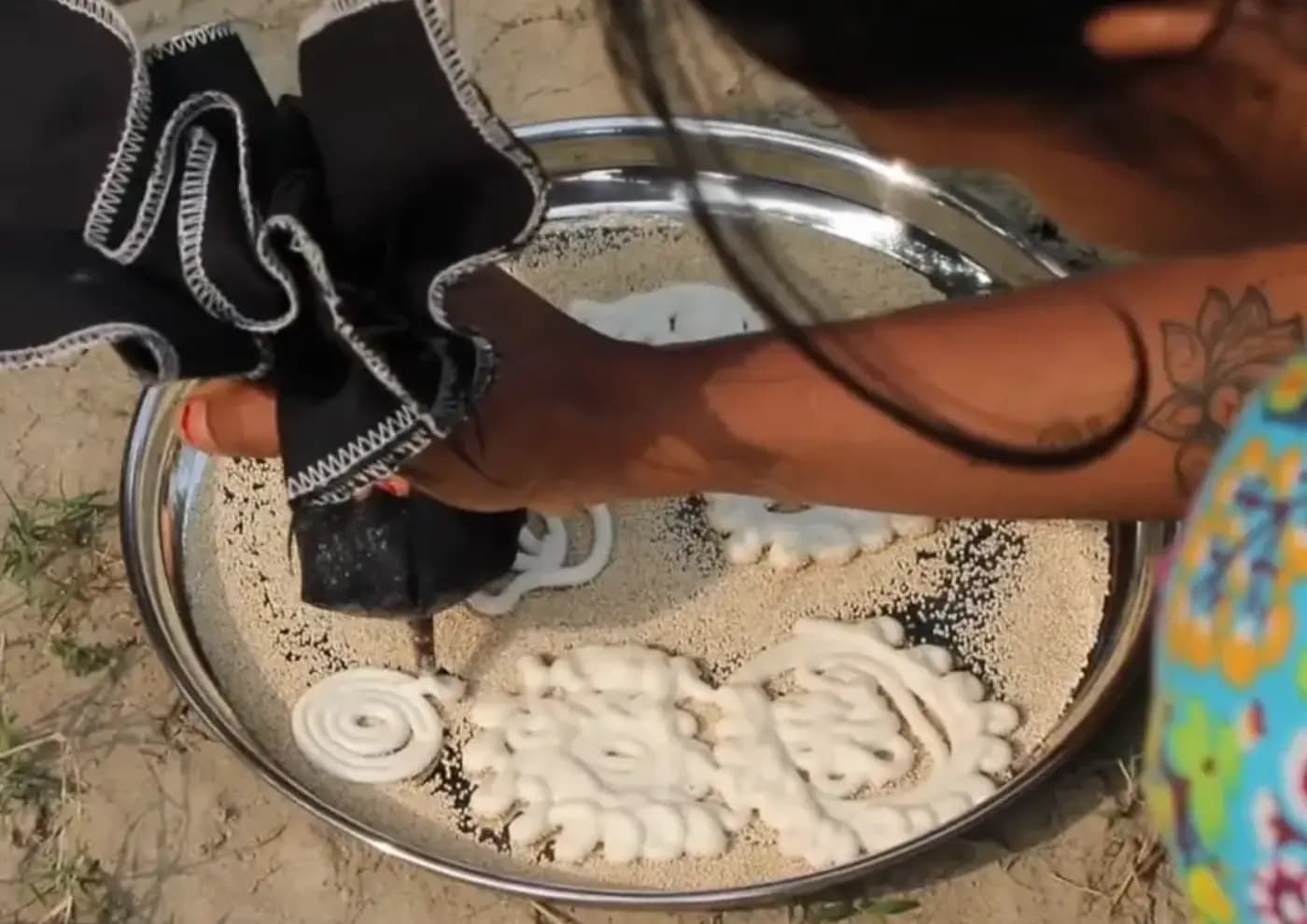
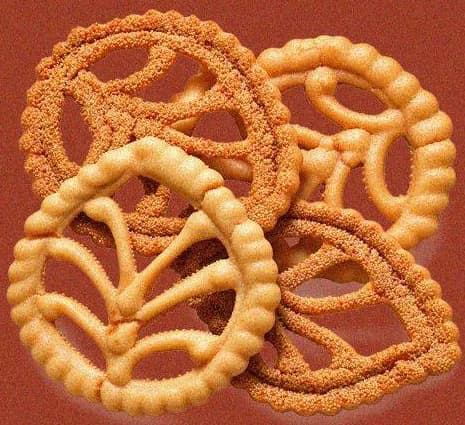
The most fragile masterpieces adorn your plate
‘Gohona’ means jewellery. The name is literal. The patterns pressed into each piece are the same motifs a Bengali household would recognise from ornaments and from the alpana painted on a courtyard floor.
It is also called Naksha Bori.
Nandalal Bose called them jewels found in the frangible box of Mother Bengal.
Rabindranath Tagore was struck enough by the designs to have them preserved on the walls of Visva-Bharati.
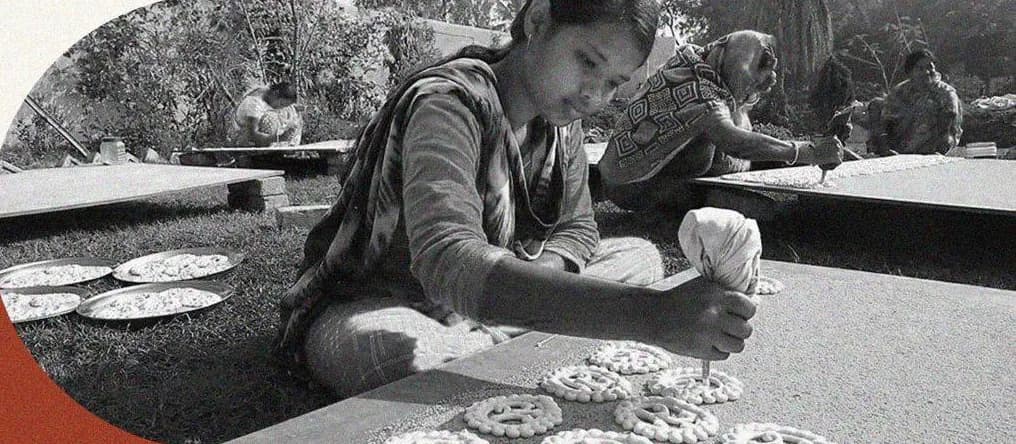
Purba Medinipur.
Gohona Bori comes from Purba Medinipur, in West Bengal. Here it was once a status symbol. When a daughter married, her parents gave her Gohona Bori to carry with her to her new home.
It was a common snack for children, too. It is still a delicacy.
The lentil it is made from, biuli’r dal, is grown in the fields here. It is a local variant from the same family as urad dal, prized for its texture and finish.
Soaked, ground, shaped, dried.
Everything is done by hand. No machines: the lentils are ground on sheel-nora, the traditional stone. Purists say a blender changes the texture, and here we agree with the purists.
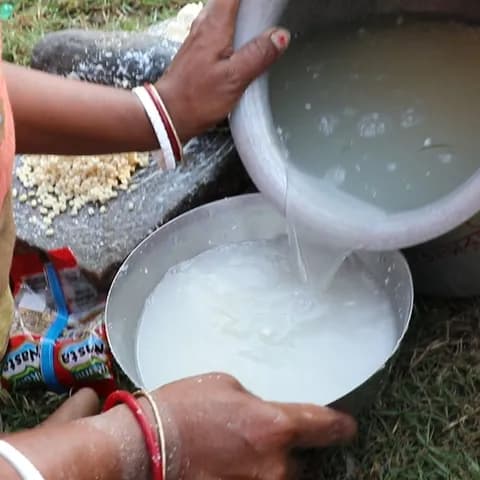 01
Soak
The biuli’r dal goes into water overnight.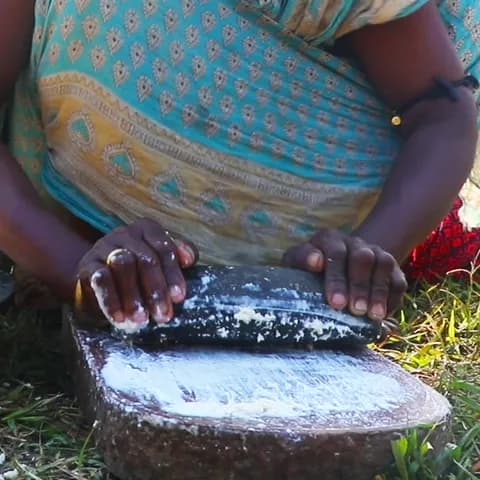 02
Grind and season
Ground on sheel-nora into a paste, then seasoned, with food-grade poppy seed as a base ingredient.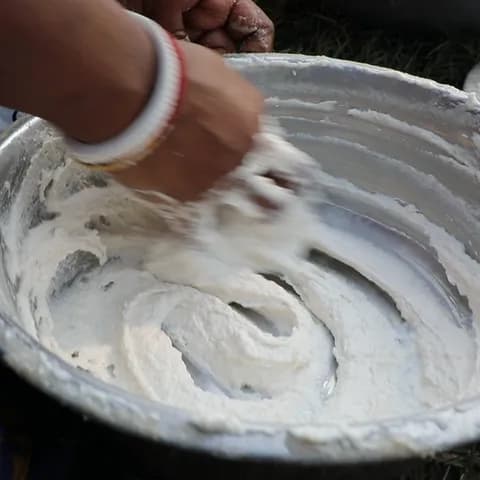 03
Whisk and shape
The batter is whisked by hand until it rises, then piped into patterns so fine they look like alpana drawn in relief.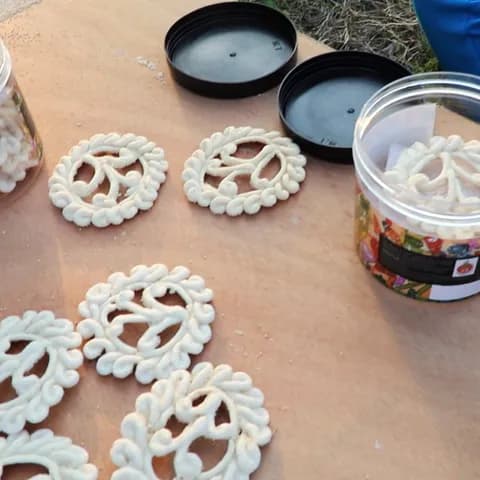 04
Dry
The shaped bori are set out in the winter sun to dry. Then they are fried and eaten.
Crafted only when the winter air bites just right
The season decides, not us.
The batter needs cold air to rise properly while it is being whisked. The shaped bori need clear, mellow winter sun to dry to the right crispness and the right white. If the sky clouds over halfway through a day’s work, the batch is lost — soaked lentil paste cannot be stored and used later.
- The season
- Nov – Feb
- Winter mornings
- 10–15°C
- Soaking the dal
- Overnight
- Building the batter
- Two stages
Fewer people make it every year.
It can only be made in winter, and the paste cannot be stored. It needs cold air, clear sun, a stone and hands that know the patterns. A blender changes the texture. A cloudy afternoon loses the batch.
Turiyo’s founder, Sandip Maiti, grew up watching his mother and grandmother make it as though it were nothing. When it became clear how few people were still making it, he set about salvaging the intricate detail of the technique, and persuaded family members to help pass it on to anyone willing to learn.
The goal now is to keep the craft intact in its traditional form, and to teach it to anyone genuinely interested in learning it.
We stopped trying to sell it.
Turiyo began working on Gohona Bori in November 2021. Turiyo Foods set out to revive it, with pickles and preserves, and to create income for younger women in the village. Over fifty women took part.
It also produced a conclusion. Scaling the product meant compromising the craft. So the work became the residency — teaching the craft rather than manufacturing the product.
Biuli’r dal and poppy seed. Nothing substituted.
A small quantity is still made to order each winter, for people who want the thing itself rather than the lesson.
Order Gohona Bori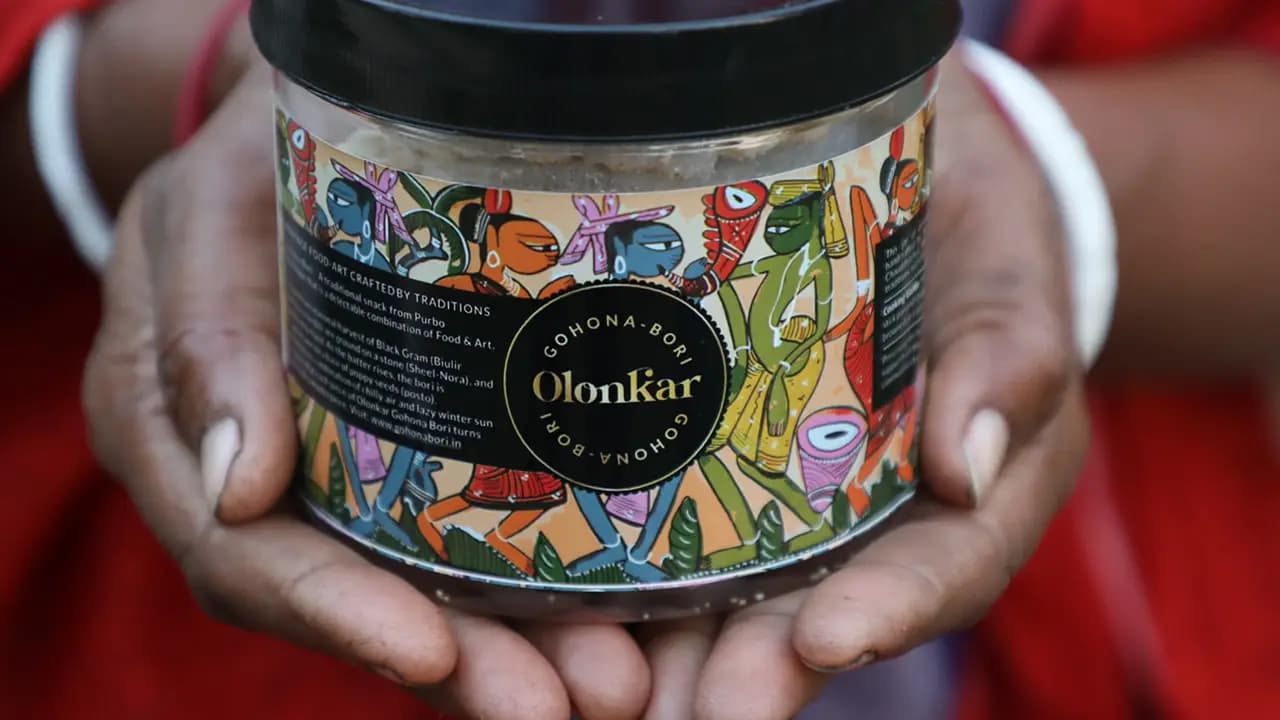
100% authentic ingredients
Every batch carries a guarantee of 100% authentic ingredients, including food-grade poppy seed. Poppy seed is a base ingredient in this recipe and is expensive — around INR 2,200 per kg — and we do not substitute it.
Come and learn something that is almost gone.
For two nights each winter, in a village in Purba Medinipur, we teach it to whoever wants to learn.