In Our Hyper-Connected World, Are We Losing Our Ability to Contemplate?
I’ve been deeply pondering the importance of reflection in our lives, a practice beautifully encapsulated in the Hindu philosophical triad: Shravana, Manana, and Nidhidhyasana. “Shravana” (listening to sacred texts…
By Sandip Maiti · AllMaiti

I’ve been deeply pondering the importance of reflection in our lives, a practice beautifully encapsulated in the Hindu philosophical triad: Shravana, Manana, and Nidhidhyasana. “Shravana” (listening to sacred texts or teachings from a Guru) is the standard term for the first step in this well-known sequence, followed by “Manana” (reflection, contemplation) and “Nidhidhyasana” (deep meditation, assimilation). It is this middle stage, Manana — the act of spending time in quiet contemplation — that has been particularly resonant with me lately.
The Therapeutic Power of Disconnecting and Reflecting
I find myself increasingly drawn to carving out moments free from the constant barrage of external inputs — be it reading, watching, or learning in a structured way. Instead, I’m dedicating more time to simply reflecting on my own observations and experiences. There’s a profound, almost therapeutic quality to this process. As I advance in age, the simple act of reflecting on my thoughts, probing deeper into their origins, and understanding what lies beneath brings immense pleasure.
One such moment of reflection came as I gazed at the night sky — a luxury more readily available in the quietude of a village, away from the whitewashing glare of city lights. Looking at the stars fills me with a deep sense of wonder. Occasionally, on a walk, glancing upwards instils a profound humility, a stark reminder of our own insignificance in the grand cosmic theatre. It reminded me of how ancient civilizations, like the Babylonians or the knowledge seekers of old India, looked to the heavens. They observed, reflected, and though their theories might have been different from our current understanding, their observation of nature led to immense discovery and contemplation.
The Modern Dilemma: Manufactured Realities vs. Natural Immersion
This brings me to a crucial point about our modern society. So much of our time is spent interacting with human-made environments and creations. We live in apartments, consume media on screens, read books — all valuable, yet largely disconnected from the raw, unfiltered expanse of nature. We are often confined to small, curated spaces, moving from one manufactured setting to another, increasingly enveloped by technology. It makes me wonder: Is this sensorial overload from manufactured items diminishing our inherent curiosity and humility? Are we losing the ability to assess our place vis-à-vis the vastness of the universe and the magic of nature?
The sensorial inputs from nature place you in a markedly different state of mind compared to being surrounded by material objects. I experience this acutely in my village. The early morning sunlight streaming through the window, the chorus of perhaps ten or twelve different bird species — these simple things create a sense of magic. It’s not necessarily about a conventionally “pretty” landscape, but the naturalness of it sparks curiosity: “What kind of bird is that? What is that sound?” This is a stark contrast to a morning in a bustling environment, filled with alarm clocks, traffic, and the general cacophony of urban life.
My thesis is that prolonged exposure to nature inherently nudges us towards a more reflective state, fostering curiosity and wonder.
A Mango Teaches a Lesson in Being
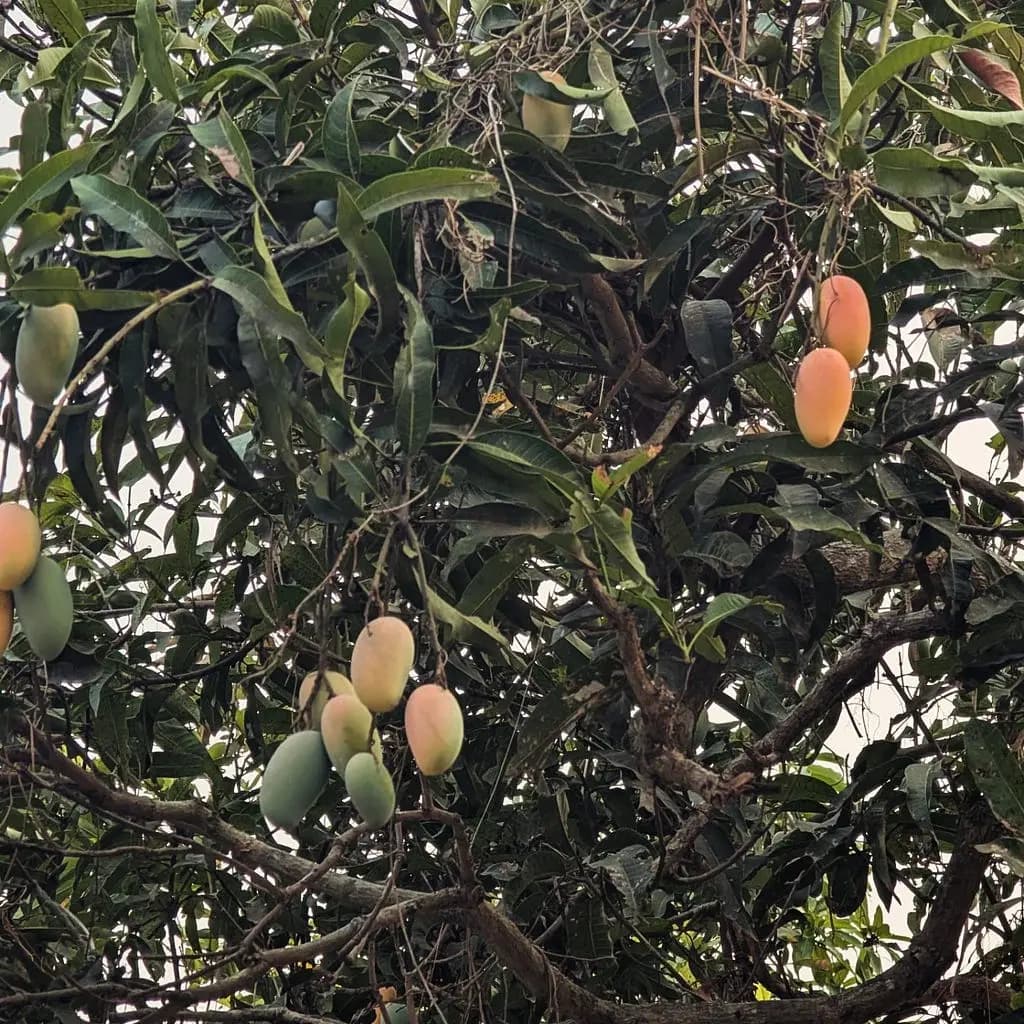
Let me share a recent, vivid experience. This season, our mango trees have been abundant. While family members from the village carefully picked and stored the fruit, I was initially a content, yet passive, consumer. Then, I started observing one tree more closely, taking pictures as the mangoes slowly changed colour.
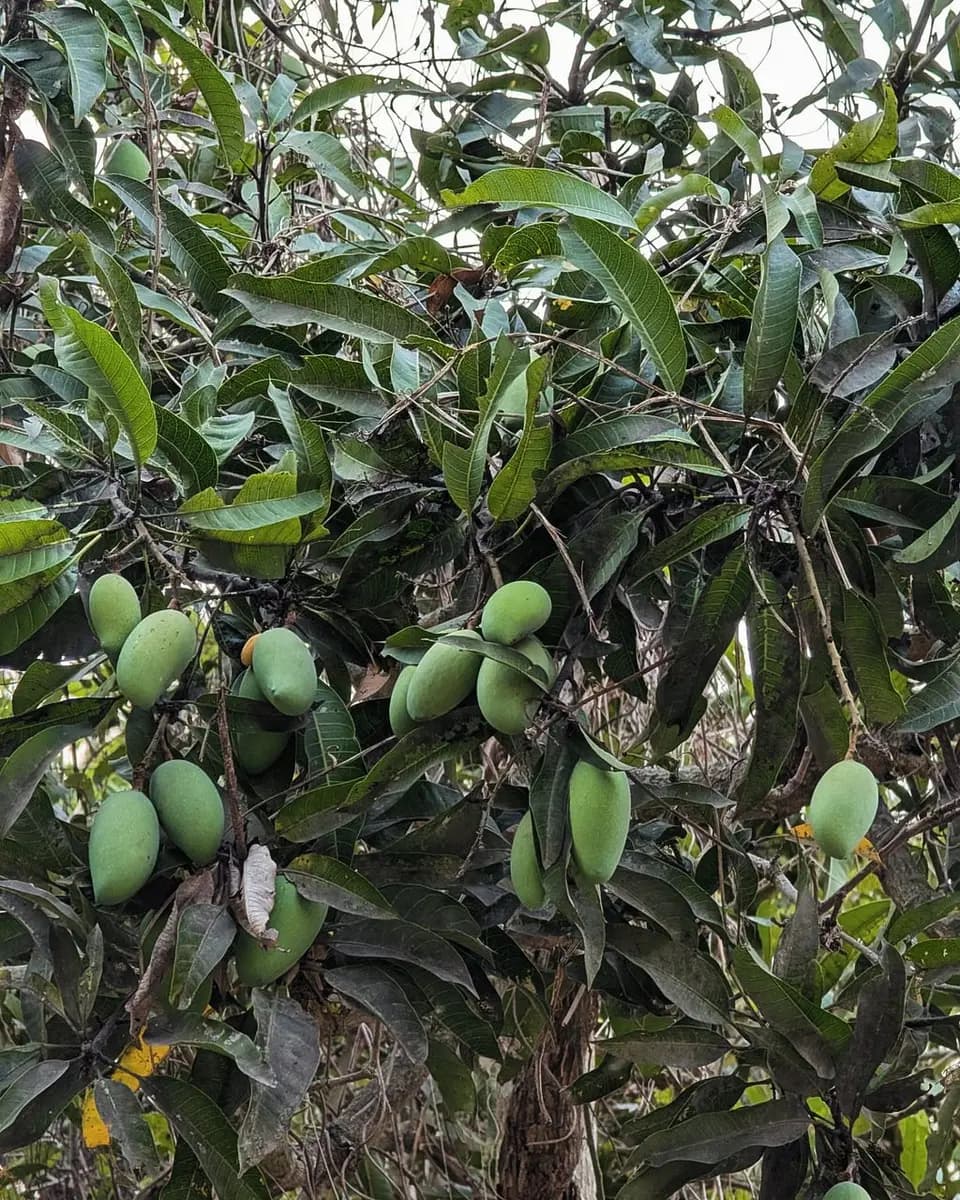
The day before, with a little encouragement, I plucked one. The simple act of it coming into my hand felt magical. The next day, seeing ripe mangoes fallen on the ground, I felt a sudden urge to gather them, unable to bear seeing them go to waste.
Why this shift in my behaviour? Did this sustained exposure to a simple, natural process — a fruit ripening on a tree, day by day — lead me to a different state of mind? Living amongst it, witnessing the slow transformation, the eventual fall, and then the act of picking and biting into it — this entire sensory experience cultivated a deeply calm, reflective state. It prompted me to probe more into the nature of existence itself.
Cultivating Environments for Deeper Connection
My explorations into neuroscience and consciousness studies, while fascinating, often feel frustratingly inconclusive. Yet, having scratched the surface of Vedantic philosophy, I see immense potential in the direct experience of nature for understanding consciousness. This leads me to a critical question: what if we could cultivate environments where people could live more harmoniously with nature, rather than opting for the “efficient” model of packing people into urban settings?
Our current systems are largely manufactured. But perhaps they can be re-imagined. Can we find ways to integrate living in smaller towns or even within cities with more spacious, natural settings? Settings that encourage exploration and direct experience rather than constant mediation through screens, books, or podcasts. While we learn from these mediated inputs, they are not a substitute for the direct, sensorial experience of the world, of life unfolding, of witnessing the cycles of nature firsthand.
The Path Forward: Experience, Reflect, Grow
I believe this direct experience of nature — feeling the sun, hearing the birds, watching a fruit ripen — brings a sense of humility and an understanding of our own small significance. Engaging in Manana, reflecting deeply on these experiences, develops our cognitive faculties far more profoundly than passively consuming media.
This year, I’ve made it a personal goal to consciously cut back on media consumption and actively seek out more direct experiences, followed by dedicated time for reflection. There are moments, of course, when I get pulled back into the vortex of information, but my effort is to consistently return to this path of experiencing and reflecting.
This is my thought for the day — an invitation, perhaps, for us all to seek out those unfiltered moments with the natural world, to allow them to seep into our being, and to dedicate time to reflect on the quiet wisdom they impart.
<LISTEN>